9.58 seconds, with a defined beginning and end
Usain Bolt’s men’s 100 metres final at the World Championships in Berlin on 16 August 2009 produced a time of 9.58 seconds. The official result includes a wind reading of +0.9 metres per second. Those details explain more than the familiar headline: this was an outdoor championship race with fully automatic timing and a following wind within the permitted limit for record purposes.
A sprint time runs from the starting signal to the athlete’s torso reaching the finish plane. It is not simply the time spent moving at maximum speed. Reaction and acceleration are part of the performance. Dividing 100 metres by 9.58 seconds gives an average speed of about 10.44 metres per second, but it does not establish Bolt’s peak speed during the race.
Wind matters because moving air can assist a runner. For the outdoor 100 metres, a following wind above +2.0 metres per second prevents a performance from qualifying as a wind-legal record. A faster wind-assisted run can still be a valid race result; it belongs to a different comparison.
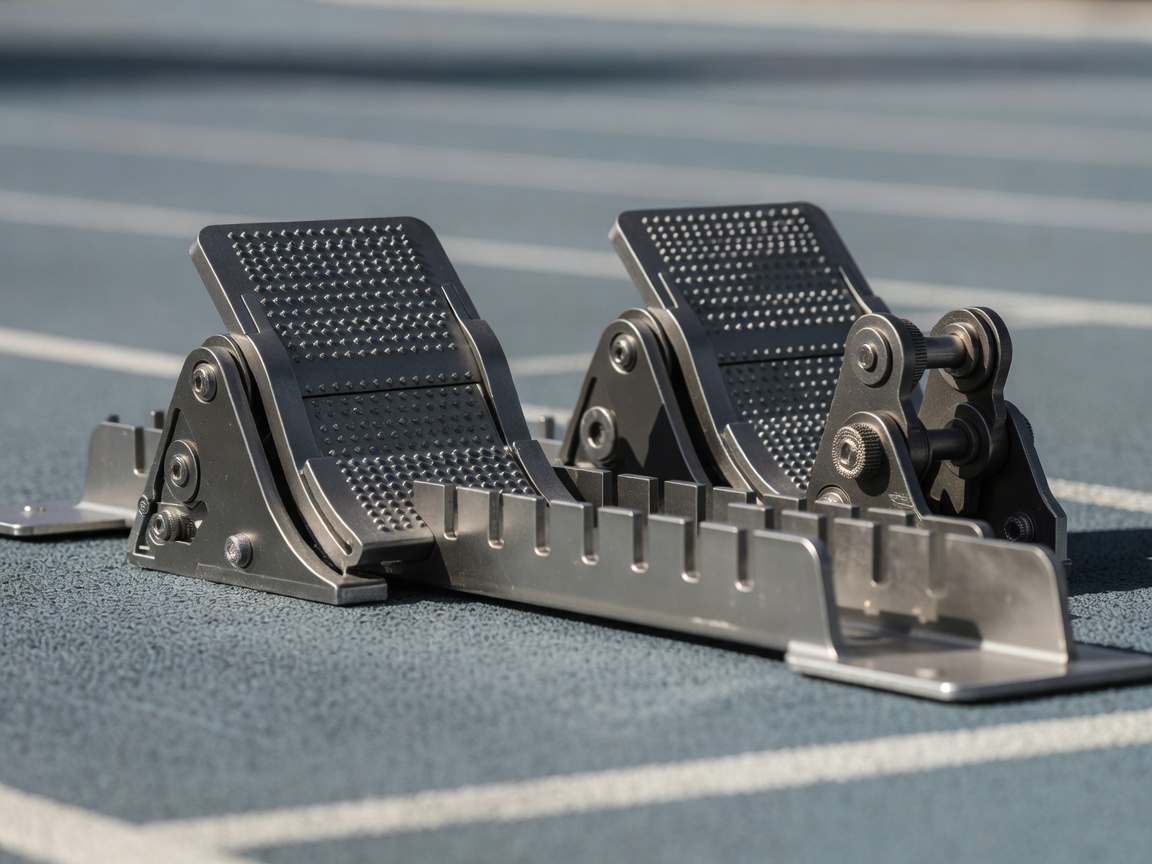
- Performance
- 9.58 seconds
- Event
- Men’s outdoor 100 metres
- Date
- 16 August 2009
- Wind
- +0.9 metres per second
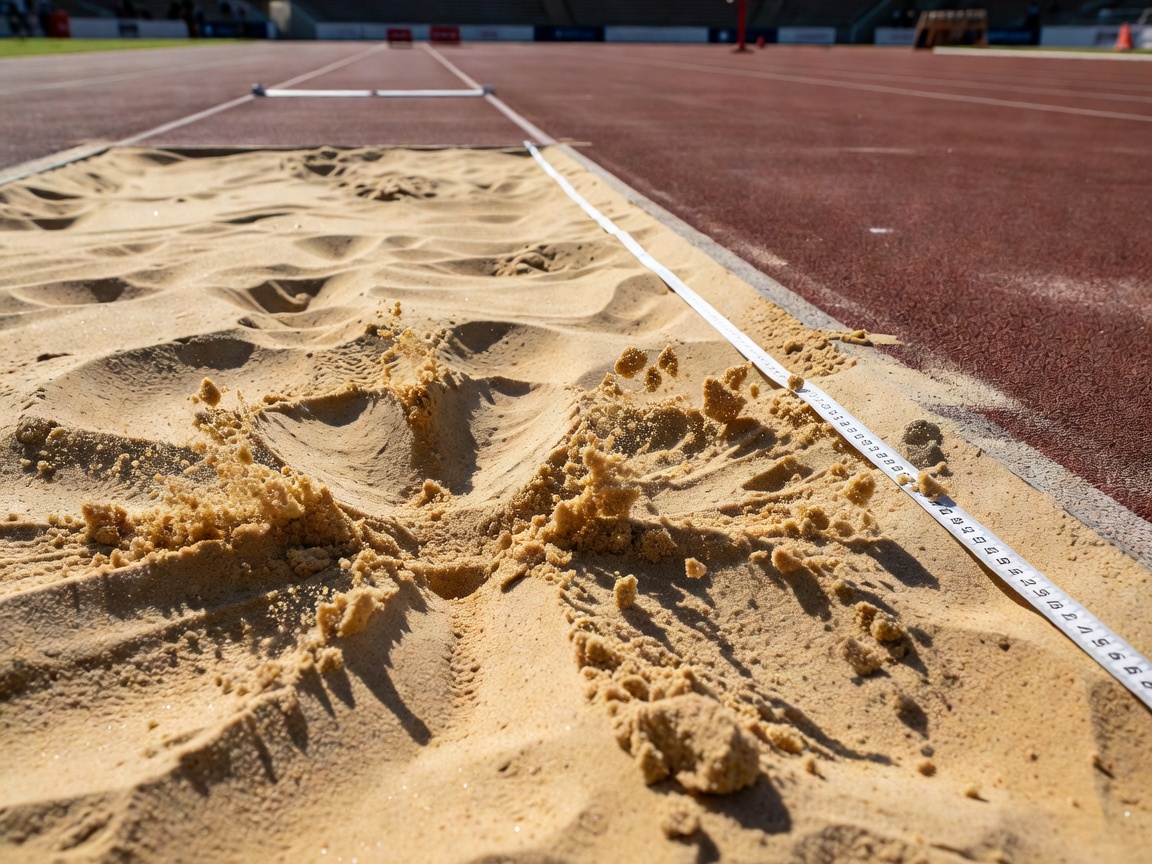
8.95 metres, measured from the right place
Mike Powell jumped 8.95 metres at the World Championships in Tokyo on 30 August 1991. The recorded wind was +0.3 metres per second. His mark exceeded Bob Beamon’s 8.90 metres from the Mexico City Olympic Games on 18 October 1968 by five centimetres.
The distance is measured from the take-off line to the nearest break in the landing area made by the athlete. A hand falling behind the landing position can therefore reduce the measured distance. Equally, taking off behind the line leaves unused distance that the official result does not add back. The mark is a rules-based measurement, not a reconstruction of the athlete’s exact flight.
Beamon’s achievement also belongs to its setting. Mexico City is at high altitude, where thinner air changes aerodynamic resistance. That context helps explain performance conditions, but it does not make a legal result unofficial. The careful comparison keeps both the accepted mark and the environmental explanation visible.
2:00:35, on a measured road course
Kelvin Kiptum ran 2:00:35 at the Chicago Marathon on 8 October 2023. This is a dated performance, not a promise that this page tracks every subsequent result. The marathon distance is 42.195 kilometres, and a road record requires more than a finishing clock: course measurement, start-to-finish separation and elevation change are relevant to eligibility.
World Athletics road-record criteria generally limit the straight-line separation between start and finish to half the race distance, and the overall elevation drop to one metre per kilometre. These conditions reduce the advantages that a strongly downhill or point-to-point course might provide. They do not make every eligible marathon identical; temperature, corners, pacing and competition still differ.
This is why an exhibition performance under specially arranged conditions should not automatically be placed in the same list as a ratified road-race record. The athlete’s effort may be extraordinary in both cases. The question is whether the performances satisfy the same category rules.
A useful way to read any result
Start with the event and category, then identify the official result and date. Check timing method, wind where relevant, and course eligibility. Finally, distinguish an achieved mark from its ratification status. A contemporary news report can capture the moment; the governing body’s record is the stronger place to verify official recognition.
None of this reduces the wonder. It locates it. Bolt’s acceleration, Powell’s controlled take-off and Kiptum’s sustained pace become more impressive when the reader understands what the instruments and rules actually capture.